Blog

Check the latest testing insights, trends, and best practices on the QA Madness blog.

How to Use iOS 18 Update to Give Your App an Edge
Reading time: 5 min

How to Use iOS 18 Update to Give Your App an Edge

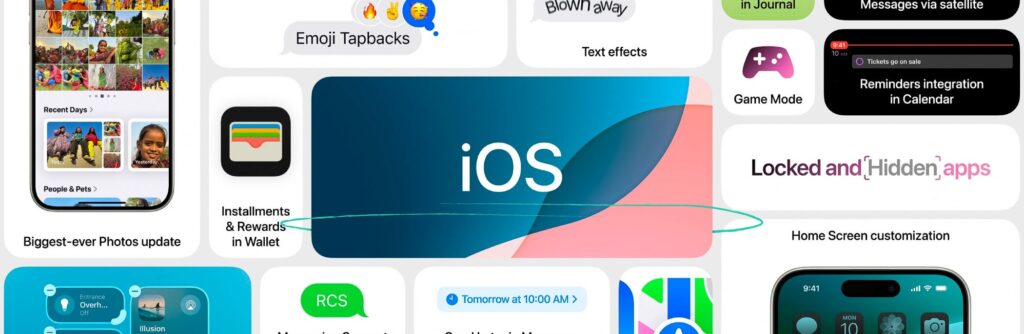
Mobile apps are all about ease of use and convenience. Nothing makes these two more prominent in your product than customization availability. Perhaps that’s why the new iOS 18 banked on fresh personalization and process simplification features. Today, we discuss Apple’s hot update and what it means for your applications. iOS 18’s New Features & Their Implications This article isn’t going to dissect and fawn over Apple’s new stuff. We’re going to talk about how you can benefit from it and what you should add to your own apps. That’s why we’ve picked only those features that will have the biggest impact on your product. Customizable App Icons Getting to set up your own space evokes a special sense of ownership and belonging. With iOS 18’s customization options, people can now spend even more time immersed in their phones by playing around with their app icons.  Apple now offers three styles for its icons: Light. Dark. Tinted. For u...

Read more
  • All Solutions
  • Accessibility Testing
  • Performance Testing
  • Regression Testing
  • All industries
  • E-Commerce & Retail
  • E-Learning
  • Fintech
  • Healthcare
  • Hospitality
  • Logistics & Delivery
  • Marketing & Sales
  • Media & Entertainment
  • Software Development
  • Sports & Fitness
  • Supply Chain
Reading time: 7 min

How to Run Functional and UI Testing for Payment Solutions

Payment systems have become an integral part of a variety of websites and applications. E-commerce is the first thing that comes to mind, but it is not the only one. Just think about services and applications you use regularly. Food delivery, streaming services, e-learning platforms, taxi apps – the majority of them have in-built payment functionality. Whether we are talking about a fully functioning payment system or a payment gateway, it requires testing before the product goes live. In this article, we decided to cover the basics – the importance and particularities of this testing type and the way a functional testing company approaches it. It would be helpful for stakeholders who want to know more about quality assurance for their product and beginner QA specialists in a manual QA testing services company. Why Is Functional Testing Essential? Functional testing aims to verify that the real behavior of the implemented features matches the requirements and specific...
Read more
Reading time: 7 min

How to Write Test Cases: a Comprehensive Guideline

During testing, a QA engineer faces lots of documentation and different kinds of artifacts. Checklists, test suits, test scenarios, test plans, test reports, test analysis – these are just some items on the list of documentation a QA engineer should be able to interact with and create. Today, we will tell you about one of those significant artifacts – manual test cases. A Test Case: Definition and Purpose. A test case is a set of actions executed to verify a particular feature or functionality of your software application. The purpose of a test case is to verify that a certain feature works as expected, to confirm that the functionality, UI/UX, and other parameters of a system satisfy all the related standards, guidelines, and customer requirements. Differences Between a Test Case and a Checklist We use test cases on complicated projects, for example, where human life depends on system behavior. These projects may be in the sphere of fire alarms, health care, financ...
Read more
Reading time: 6 min

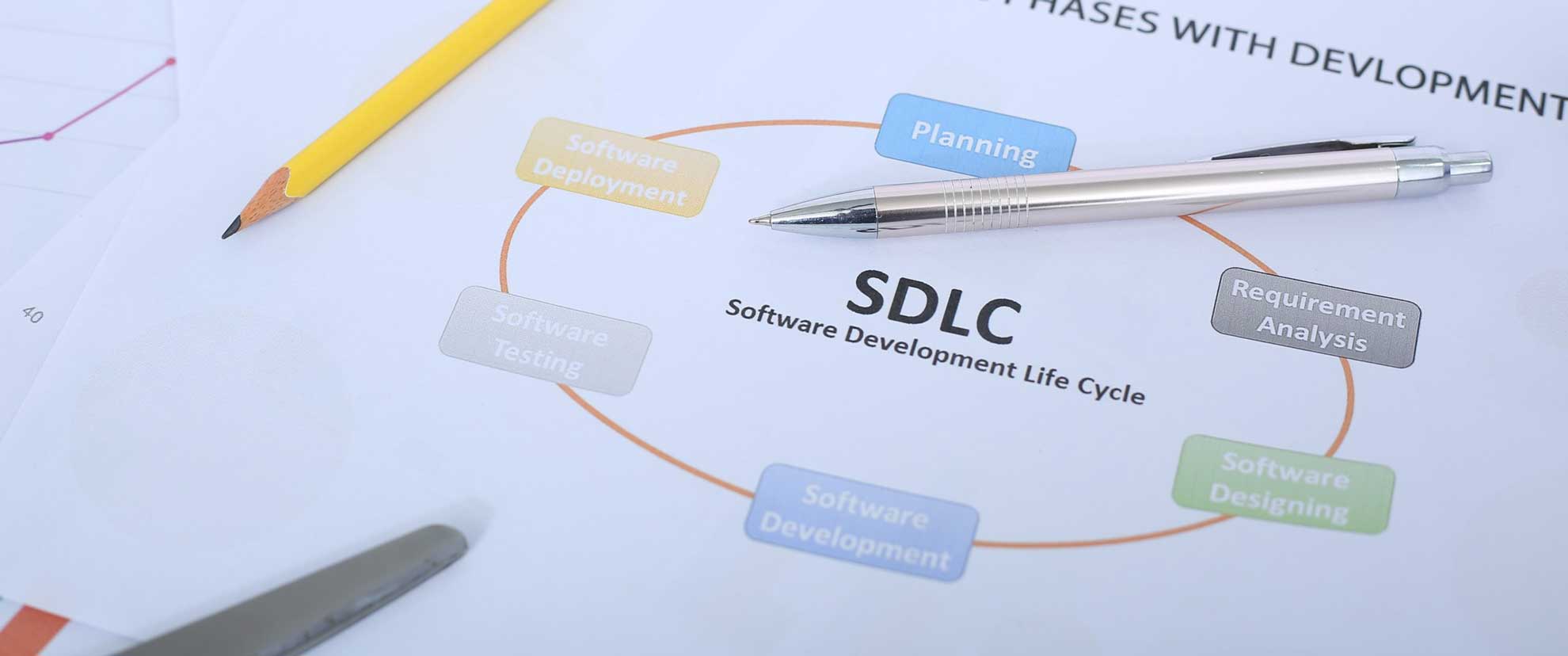
The Essential Phases of Every Software Development Life Cycle

A software development life cycle (SDLC) is a methodology that defines the process of creating a software product. We’ve talked about some of the widely-used SDLC methodologies in one of the previous posts. In this article, we’d like to focus more on different SDLC phases without connection to a particular methodology. It will help to understand better what stages make a development life cycle. Regardless of their sequence and timing, these stages and activities that take place during each remain pretty much the same. A software life cycle starts at the moment the decision to create a software product arises. It ends when the mentioned product stops functioning. In between, a company builds software and maintains it, often developing new features on the way. The phases that make a life cycle are requirements gathering, concept development, product development, testing, and maintenance. Let’s take a closer look at each of them. Requirements Gathering In all SDLC models, the proc...
Read more
Reading time: 3 min

How to Write a Good Mobile App Testing Strategy in 2021

According to Statista, the number of mobile devices worldwide will increase by 3.7 billion during the next three years. Taking into account the mass digitization forced by social distancing and followed by remote work and education, it is not hard to believe. Meanwhile, eMarketer reports that smartphone users in the US spend 88% of their mobile time on apps. Of course, the numbers can vary across countries. The general tendency, however, is rather clear: people prefer apps to web view in browsers. This fact reminds us once more that every mobile app should undergo thorough testing before it appears in the stores. To ensure expected business performance and high customer retention, a company should offer users an appealing and functional software product. In other words, a solid strategy for mobile app testing services is essential. What Is a Testing Strategy? A testing strategy is a guideline a QA team follows to achieve the set quality-related objectives for a soft...
Read more
Reading time: 6 min

Testing for MVP: Does It Make a Difference?

You have an idea that you think can improve some people's lives, and you’ve decided to turn it into reality. Sometimes, however, assumptions don’t match existing market needs. So how can one predict if people will be interested in a new product? There is a way: to research the target audience thoroughly and test your idea through MVP. A minimum viable product, that’s what the abbreviation stands for, helps to understand the actual demand. Therefore, it prevents investing time and money into an initiative without a strong product/market fit. In this article, we will tell you a bit about MVP, its advantages for a startup, and specific QA services that will benefit an MVP. What Is a Minimum Viable Product An MVP is a “proof of concept” version of a new product. As a rule, it introduces the basic functionality that will make the core of the product and be significant for potential users. The purpose of an MVP is to generate user feedback and show whether the product will be in-d...
Read more
Reading time: 5 min

The Future of QA Outsourcing: Opportunities You Should Not Miss

Sometimes it is difficult for a company to ensure thorough testing of software using internal resources. The reasons may differ. For example, some devote all their resources to the development and testing shifts in the background. For others, it is not economically reasonable to create the necessary conditions for in-house testing: hire and train specialists, invest in the technologies, etc. In such cases, QA outsourcing companies come to the rescue. Even before the quarantine, the IT industry was actively using outsourcing, outstaffing, and freelance services. But in 2021, the number of remote employees doubled. Many companies became less cautious about long-distance cooperation. In the end, the pandemic forced the entire world to shift to the remote mode in a few days. As it turned out, it was possible to maintain the processes functioning even with teams outside the offices. Involving outsource resources is usually faster and simpler than creating a new team inside a company. It w...
Read more
Reading time: 10 min

What Is a Test Plan and How to Write One?

Well-written documentation lies at the core of an efficient QA process. Documentation brings structure and logic to the testing activities. In a way, it unites project team members around the same goal, providing a clear understanding of the hierarchy, tasks, and expected outcomes. One of such documents is a Test Plan. In this article, you will learn: what a software Test Plan iswhat a software Test Plan is; how it is different from a Test Strategy; what role it plays in the project; types of plans; why a team needs a Test Plan; and, most importantly, how to draw it up. Before proceeding to the definitions and explanation, we’d like to explain one more important term from the QA field – a test artifact. Test artifacts are by-products generated during the software testing process and shared with the project team. Simply put, these are documents that bridge the communication gap between all the members. Now, let’s move to a Test Plan and its specifics. What Is a Test...
Read more
Reading time: 8 min

What Is The Role of a Business Analyst in Quality Assurance?

Though QA business analysis is very significant for a company's advancement on the market, people tend to confuse it with market analysis, UX research, data analysis – probably, with all other analytical activities. Actually, it is not surprising, given the blurry line between roles and responsibilities each of the mentioned activities implies. Meanwhile, it may seem complicated to decide what falls under the responsibility of a Business Analyst during quality assurance procedures and what should remain a task for QA engineers and a Team Lead. We decided to clarify this matter and, explaining the ties between BA and testing, the role of a Business Analyst in the QA process, and the place of this professional in a quality assurance & testing company. Who Is a QA Business Analyst? A QA Business Analyst is a member of a product development team whose task is to bridge the gap between an IT team and a business team. Usually, this specialist: analyzes business domain; evaluates str...
Read more
Reading time: 7 min

An Effective Approach to Selecting Test Cases for Automation

Software development companies are in hot pursuit of automation testing service whether it’s set up in-house or as outsourced testing. End-users are demanding higher quality apps with more advanced, intuitive features, which has spurred the evolution in software testing methodologies. Manual software testing is by no means obsolete, but it is not sufficient as a single approach to delivering high-end, bug-free products. It is time-consuming, overly-dependent on human resources, and it doesn’t ensure reliable and consistent outcomes. However, automating every aspect of software testing is not the ultimate solution nor the end goal. Managing too many test cases can be counterproductive and impractical that can cause the testing cycle to slow down with delayed feedback to developers. All too often, teams scramble to automate everything only to run into a mountain of problems. Test Automation Best Practices There are several factors to consider when identifying initial test candidate...
Read more
1 24 25 26 40

Subscribe to our newsletter

QA Madness
Privacy Overview

This website uses cookies so that we can provide you with the best user experience possible. Cookie information is stored in your browser and performs functions such as recognising you when you return to our website and helping our team to understand which sections of the website you find most interesting and useful.